
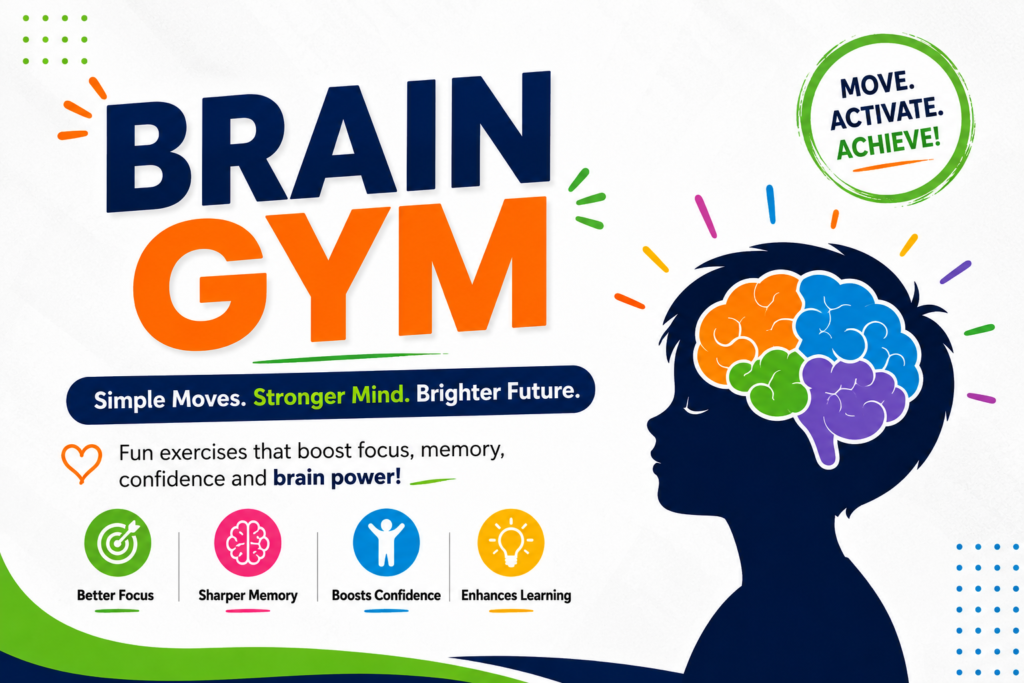
Brain Gym for Kids: How Simple Activities Can Boost Learning and Brain Development
In today’s fast-paced world, children are expected to absorb information, stay focused, and perform well both academically and socially. While regular study habits are important, keeping the brain active is just as essential. This is where Brain Gym comes in—a series of simple, engaging movements designed to support better learning, concentration, and coordination.
What Is Brain Gym?
Brain Gym is a collection of easy physical activities that encourage the brain and body to work together more effectively. These movements help activate different parts of the brain, making it easier for children to concentrate, learn new concepts, and stay engaged during daily activities.
Whether it’s crossing the midline, stretching, or improving coordination, Brain Gym exercises are designed to make learning more enjoyable and effective.
Benefits of Brain Gym for Children
Improves Concentration
Brain Gym activities help children settle their minds and improve focus, making it easier to pay attention during lessons and complete tasks without getting distracted.
Enhances Memory
Regular Brain Gym exercises stimulate the brain and support better memory retention, helping children remember concepts, instructions, and classroom learning more effectively.
Develops Coordination
Many Brain Gym activities involve movements that improve hand-eye coordination, balance, and overall motor skills, which are essential for everyday learning and development.
Reduces Learning Stress
Simple movement breaks can help children feel relaxed and refreshed, reducing mental fatigue and creating a positive mindset for learning.
Encourages Better Problem-Solving
An active brain processes information more efficiently. Brain Gym helps children think clearly, make connections, and solve problems with greater confidence.
Simple Brain Gym Activities to Try at Home
Cross Crawl
Ask your child to touch their right elbow to their left knee, then switch sides. Repeat for one minute to improve coordination and brain communication.
Lazy Eights
Draw a large sideways figure “8” (∞) in the air or on paper using one hand, then the other. This activity supports visual tracking and focus.
Hook-Ups
Cross one ankle over the other, interlace your fingers, and gently rest your hands against your chest while taking slow, deep breaths. This calming exercise helps children relax before studying.
Deep Breathing
Encourage your child to take slow, deep breaths for one minute before homework or exams to improve concentration and reduce anxiety.
Brain Gym and Academic Success
Brain Gym is not about replacing traditional learning—it complements it. When children combine movement with structured learning, they often become more attentive, confident, and ready to absorb new information.
At SIP Abacus, we believe that developing a child’s cognitive abilities goes beyond numbers. Activities that encourage focus, memory, visualization, and coordination play an important role in helping children reach their full potential.
Tips for Parents
- Include 5–10 minutes of Brain Gym before study time.
- Encourage daily physical activity along with learning.
- Keep sessions fun and pressure-free.
- Celebrate your child’s progress, no matter how small.
Conclusion
Brain Gym is a simple yet effective way to support your child’s learning journey. By incorporating easy movement-based activities into their daily routine, children can improve concentration, memory, coordination, and confidence.
When combined with structured skill-development programs like SIP Abacus, Brain Gym can help children become more focused learners and confident thinkers, preparing them for success in school and beyond.
Discover how our SIP Abacus program helps children build concentration, confidence, and lifelong learning skills.
Stay updated with learning tips, student achievements, and program updates by following SIP Abacus on social media: facebook, Instagram, youtube